
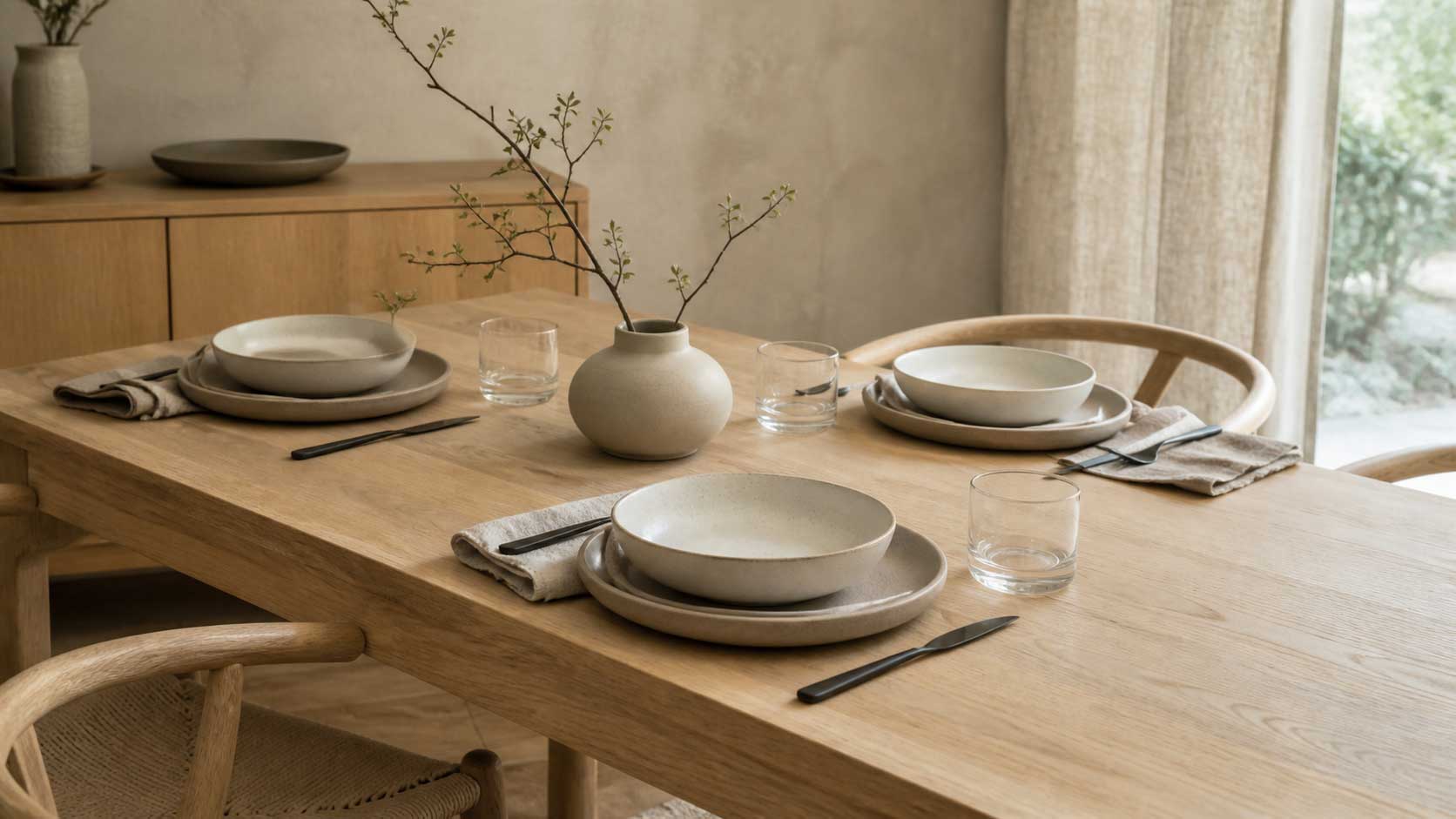
Japandi is a calm living style that combines Scandinavian simplicity with Japanese design principles. Natural materials, soft colors, functional shapes, and attention to craftsmanship play an important role.
These principles can also be applied to the dining table. Japandi tableware is generally understated but not boring. Subtle glaze variations, organic shapes, and warm neutral tones give each piece character.
What characterizes Japandi tableware?
Japandi tableware usually has a serene appearance. Ornate patterns, bright colors, and shiny decorations give way to simplicity and attention to material.
Common colors include off-white, cream, sand, beige, taupe, grayish-brown, and black. The shapes are functional and soft. Think of round plates, low bowls, and subtly organic edges.
The tableware does not have to be perfectly symmetrical. A subtle irregularity can actually give it a handcrafted look. The table remains calm because colors and shapes are close to each other.
Choose a natural color palette
A Japandi table starts with a limited color palette. Use two or three calm basic shades and, if desired, add one dark accent.
Cream and taupe together form a warm base. Off-white keeps the table light, while sand and earth tones add depth. Black or anthracite can be used for cutlery, a bowl, or a small vase.
Avoid harsh color contrasts in many different places. The goal is a table where all elements are visually connected.
Combining white and taupe
White and taupe are particularly suitable for a Japandi dinnerware set. White provides light and freshness. Taupe brings warmth and complements wood and linen.
You can combine taupe-colored dinner plates with cream-colored bowls. Conversely, a white base with taupe-colored serving dishes also works well.
Repeat both colors across multiple place settings. This creates a cohesive whole, even if the pieces do not come from the exact same series.
Organic shapes at the table
Japandi tableware often features round or subtly irregular shapes. These appear softer than sharp corners and blend well with natural materials.
An organic edge does not need to be strikingly wavy. A small variation in line or height is enough to make the tableware feel less industrial.
Do not combine too many different shapes. For example, opt for round dinner plates and low, slightly organic bowls. The repetition creates a sense of calm.
Smooth porcelain or visible texture?
Both smooth porcelain and tableware with a more artisanal finish can fit within a Japandi style.
Smooth porcelain aligns with the Scandinavian side of Japandi: light, functional, and simple. A matte or speckled finish adds more warmth and visible texture.
A combination of both can work beautifully. For example, use smooth dinner plates as a base and add bowls with a subtle glaze variation. Keep the colors close together to maintain a calm table setting.
Combine with light wood
Light wood is a recognizable element of many Japandi interiors. An oak or ash table provides a warm backdrop for white, cream, and taupe tableware.
Do not completely cover the table. A few linen napkins or narrow placemats allow the wood grain to remain visible.
A wooden serving board can also be added, but use wood in moderation. If the table, bowls, coasters, and decorations are all made of different types of wood, the setting can become cluttered.
Use natural linen
Linen suits the calm, natural aesthetic of Japandi well. Choose napkins in natural, sand, greige, or warm grey.
Fold the textile simply and avoid elaborate decorative shapes. A loose fold emphasizes the fabric's texture and gives the table a relaxed look.
A full tablecloth is not always necessary. A narrow table runner can be sufficient to add softness without hiding the wooden tabletop.
What cutlery suits Japandi tableware?
Black or anthracite-colored cutlery provides a subtle contrast with light tableware. It complements other dark accents, such as a vase or bowl.
Silver-colored cutlery keeps the table lighter and timeless. Preferably choose simple handles without much decoration.
Gold-colored cutlery can add warmth, but use a soft, matte metal finish. Very shiny gold can disrupt the understated atmosphere.
View TEKZEN's cutlery sets to choose a suitable finish.
Choose simple glassware
Transparent, low-shaped glasses fit well with a Japandi table. They add functionality without demanding much visual attention.
Smoked glass can be used as a dark accent. Amber-colored glass adds warmth, but in that case, choose a calm shape and use the same glass color for each place setting.
Avoid combining many different types and colors of glass. Repetition is important for a calm appearance.
View TEKZEN's glasses to complement your tableware.
Decorating with attention to space
In Japandi, empty space is part of the styling. The table doesn't need to be fully filled to look inviting.
Use one low vase with a simple branch or a few leaves. Optionally, place a few neutral candles, but leave sufficient space around the place settings and serving dishes.
A large bouquet, many candlesticks, and various decorative objects distract from the materials and forms. It's better to choose one object that complements the rest.
Stacking tableware for more depth
A set place setting gains more depth when you stack a dinner plate, a smaller plate, and a low bowl. This works particularly well when the pieces have different neutral tones.
Ensure that the sizes fit together logically. The edges of each piece should remain visible. This way, form and color are showcased well.
Do not use extra pieces at each place setting that are not needed during the meal. Functionality remains an important aspect of Japandi.
Japandi tableware for daily use
This interior style is not only about appearance but also about usability. Therefore, choose tableware that suits the meals you actually eat.
A spacious bowl can be used for breakfast, soup, rice dishes, and salads. A deep plate is suitable for pasta and dishes with sauce. With versatile pieces, you need fewer different types of tableware.
Always check the dimensions and care instructions. See if the pieces fit in your cupboard and dishwasher and if they are suitable for how you intend to use them.
Japandi and festive table setting
A Japandi table can also be set festively. The luxury then lies not in excessive decoration, but in beautiful materials and careful placement.
Use fine linen, elegant glasses, and a few candles in warm neutral tones. Optionally, add a dark serving dish for contrast.
For winter, you can use dark green and warm grey. In spring, light tones and a simple blossom branch keep the table fresh.
Combining different dinnerware sets
You don't necessarily have to use one completely identical set. Japandi lends itself well to combining pieces, as long as color, shape, and material complement each other.
For example, combine cream dinner plates with taupe-colored bowls and a black serving dish. Limit the combination to a few recurring shades.
With TEKZEN's serving dishes, you can complement a calm base with a subtle contrast.
A table that radiates tranquility
Japandi tableware brings together simplicity and warmth. Soft colors, natural materials, and functional shapes create a table setting that looks calm and works pleasantly.
Start with a neutral dinnerware set and add wood, linen, simple glassware, and one dark accent. Leave ample space between the pieces and choose decorations thoughtfully.
View TEKZEN's dinnerware sets and create a warm, minimalist table that suits both daily use and special occasions.