
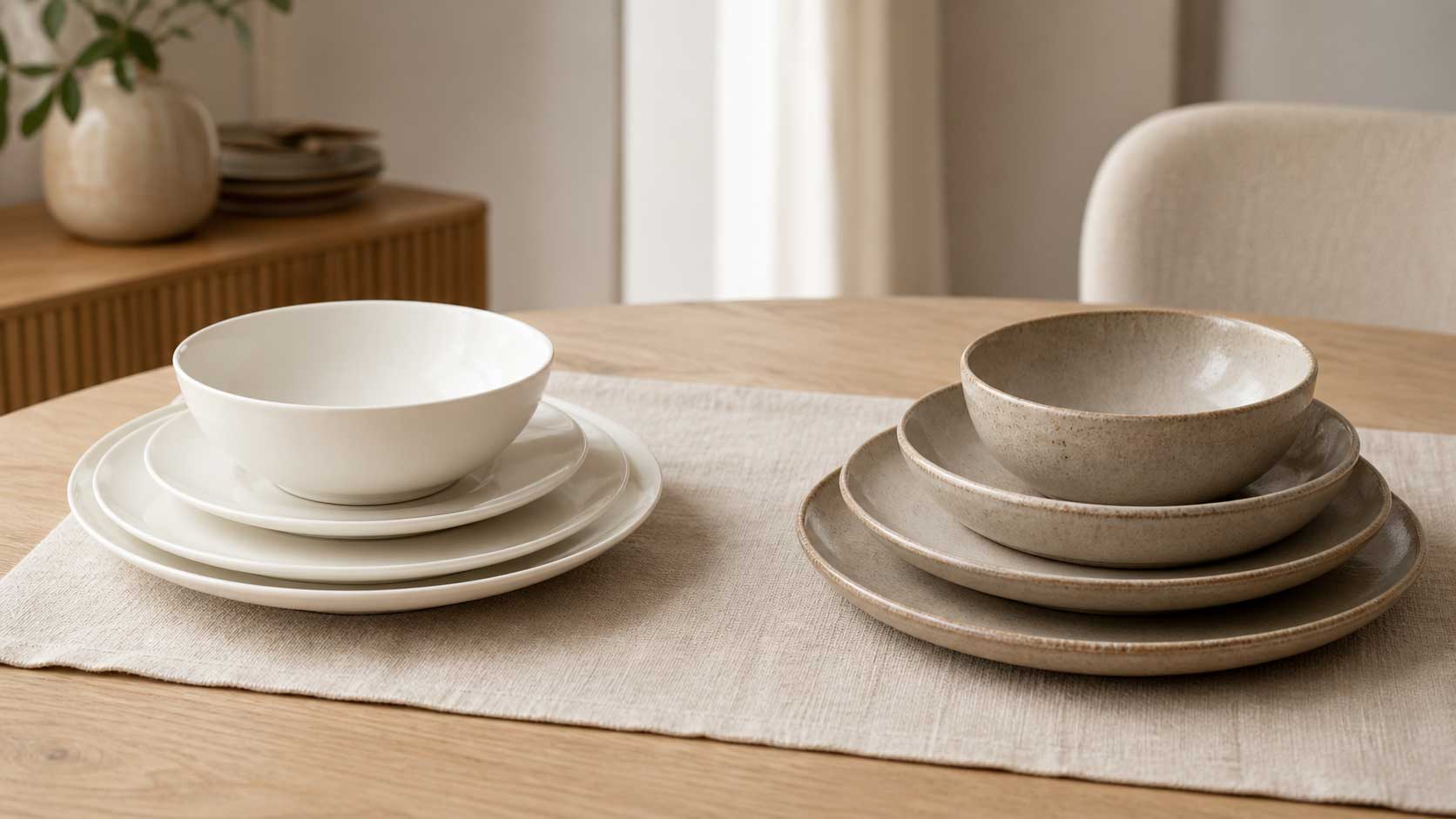
When buying a new dinnerware set, you'll encounter various materials. Porcelain and ceramic are among the most popular choices. Both materials can be suitable for everyday use, but they differ in appearance, weight, finish, and maintenance.
What exactly is the difference between porcelain and ceramic? And which material best suits your household and table style?
Is porcelain also ceramic?
Technically, porcelain is a type of ceramic. Ceramic is a collective term for products made from natural raw materials and fired at high temperatures.
In stores, ‘ceramic dinnerware’ usually refers to earthenware or stoneware. Porcelain forms a separate product group with a different composition and production method. In this article, we use ceramic in its common meaning: dinnerware with a somewhat thicker, more robust, and often artisanal appearance.
What is porcelain dinnerware?
Porcelain is made from a fine blend of raw materials, typically using kaolin. The material is fired at a high temperature, resulting in a compact and refined product.
Porcelain dinnerware is often relatively thin, smooth, and light in color. It can have a bright, elegant appearance and is therefore used for both everyday dinnerware and luxurious dinner sets.
White porcelain is particularly versatile. It enhances the colors of dishes and can be easily combined with various types of table linen, glasses, and cutlery.
What is ceramic dinnerware?
Ceramic dinnerware, such as earthenware or stoneware, often has a somewhat thicker and heavier form. The surface can be smooth, but also have visible glaze variations, speckles, or color gradients.
It is precisely these small variations that give ceramic dinnerware a warm and artisanal look. The material fits well with country, industrial, Mediterranean, and Japandi interiors.
No two pieces need to look exactly alike. With dinnerware featuring a reactive glaze, color and pattern can intentionally vary per plate.
The difference in appearance
Porcelain generally looks refined, calm, and elegant. Its smooth finish suits a neatly set table, but can also be used as a neutral base. With white porcelain, you can easily change the ambiance by adding different table linen, cutlery, or glassware.
Ceramic often has more visible texture. A matte finish, speckled glaze, or an organic rim gives each piece extra character. This means that even a simple meal can have an atmospheric presentation.
Are you looking for a timeless base that suits almost any occasion? Then porcelain is a logical choice. Do you want the dinnerware itself to be a striking part of the table setting? Then ceramic might be a better fit for you.
Difference in weight and thickness
Porcelain plates can feel thinner and lighter than comparable ceramic plates. This makes them pleasant to lift, stack, and place in the dishwasher.
Ceramic dinnerware often feels somewhat heavier and more robust. Some people find this pleasant because the dinnerware stands firmly on the table. The extra weight can be less practical when you have to move large stacks or use high kitchen cabinets.
However, weight and thickness vary per product. Therefore, always check the dimensions and product specifications of the specific dinnerware set.
Which material is stronger?
It is not advisable to determine which dinnerware is stronger solely based on the material name. The quality depends, among other things, on the composition, firing temperature, thickness, shape, and finish.
Well-made porcelain can be strong despite its refined appearance. Ceramic dinnerware can feel robust but is still susceptible to knocks, drops, and large temperature differences.
Rims are vulnerable on all dinnerware. Place plates carefully in the dishwasher and prevent pieces from clashing harshly against each other.
Which dinnerware is suitable for everyday use?
Both porcelain and ceramic can be suitable for everyday use. The best choice depends on your preference and the manufacturer's information.
Porcelain is appealing if you are looking for light, smooth, and versatile dinnerware. It suits a quick breakfast, a regular dinner, and a festive meal.
Ceramic is interesting if you like a warm, informal, and artisanal atmosphere. It can give everyday meals extra flair without needing much decoration.
Always check before purchasing whether the chosen set is suitable for the dishwasher and microwave. This can vary by product and finish.
Maintenance of porcelain dinnerware
Simple porcelain without special decoration is generally easy to maintain. However, you should always follow the instructions for the specific product.
Dinnerware with gold-colored rims, metallic details, or a special print may require extra care. Such items may not be suitable for the microwave and may benefit from hand washing.
Do not use an aggressive scouring pad on decorative surfaces. This can damage the shine, color, or print.
Maintenance of ceramic dinnerware
With ceramics, too, the finish determines how you maintain the dinnerware. A well-applied glaze layer protects the surface, but unglazed edges and handmade details can be more sensitive to moisture or discoloration.
Do not suddenly expose hot dinnerware to very cold water. A large temperature difference can cause tension in the material.
Also, check if the bottom is smooth enough to prevent scratches on the table or other dinnerware. You can optionally place soft protection between stacked plates.
Which color fits best?
Porcelain is often chosen in white, cream, or a light neutral shade. This creates a calm background for colorful dishes.
Ceramic dinnerware is available in many natural colors, such as taupe, sand, green, gray, and black. These shades complement wood, linen, and other natural materials well.
Do you want to combine dinnerware with different interior styles for years? Then choose a neutral base color. Do you want a striking table? Then you can opt for a distinctive glaze or dark color.
Can you combine porcelain and ceramic?
Porcelain and ceramic can be perfectly used together on the table. The contrast between smooth white porcelain and a bowl with an artisanal glaze can create an interesting table setting.
Ensure one recurring element to keep the combination harmonious. This could be the same color, a similar shape, or a shared accent color.
For example, combine white porcelain dinner plates with taupe-colored bowls or a ceramic serving dish. This keeps the base timeless while adding warmth and character.
Porcelain or ceramic: the best choice
Choose porcelain if you like a smooth, refined, and versatile appearance. It is suitable for both daily use and festive occasions and is easy to combine with other table products.
Choose ceramic if you prefer a warmer, heavier, and more artisanal appearance. The visible texture and glaze variations can make each plate a characterful part of the table.
Ultimately, do not just pay attention to the material name. Also compare the composition of the set, dimensions, maintenance instructions, color, and shape.
View TEKZEN's dinnerware sets and discover which material and design best suit your daily dining moments.