
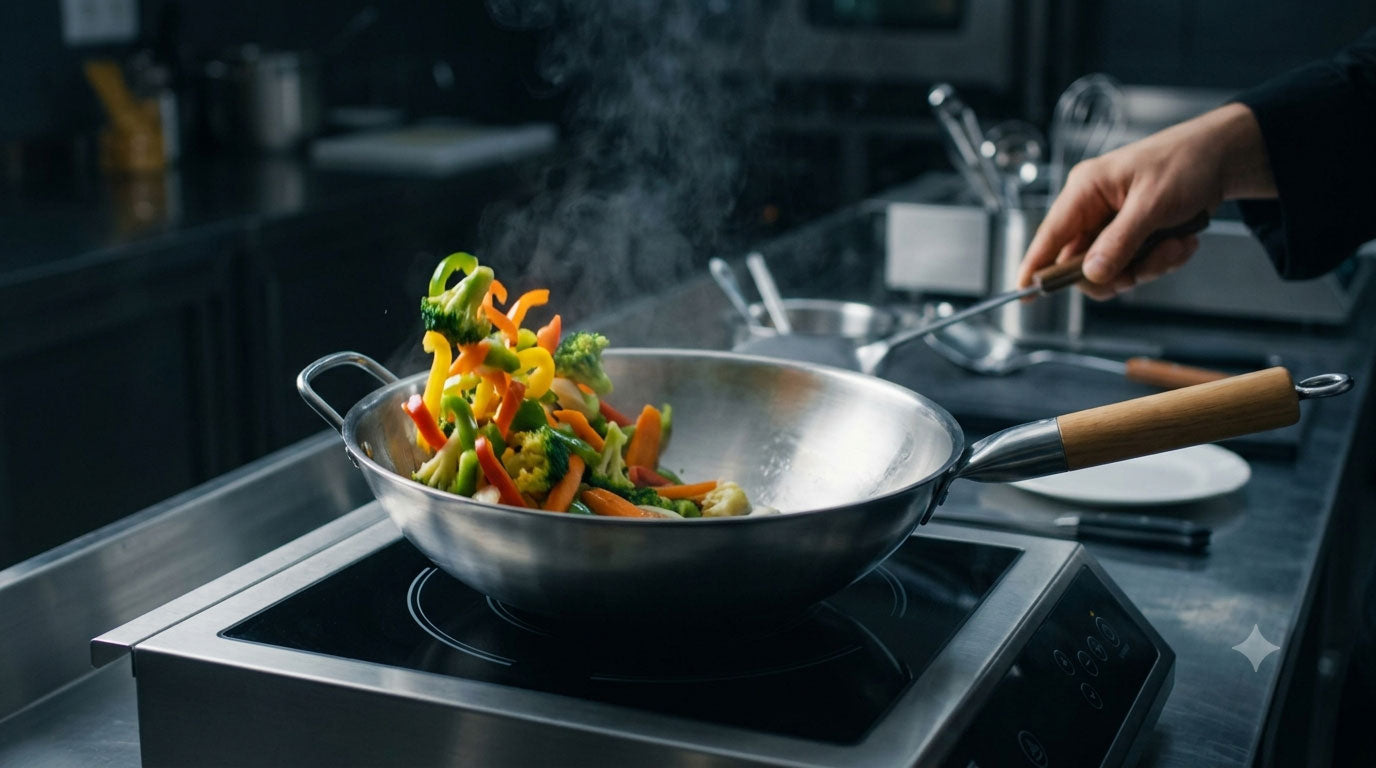
Wok cooking is one of the fastest and healthiest ways to prepare a meal. By stir-frying ingredients at high temperatures for a short time, vitamins, the crispy texture of vegetables, and vibrant colors are optimally preserved. However, those switching to an induction hob often wonder: does stir-frying work without a large gas flame?
The answer is a resounding **yes**, provided you use the right wok pan! In this article, we at TEKZEN explain why a flat bottom is indispensable, which materials perform well on induction, and how to achieve that authentic 'wok hei' flavor at home.
The Secret to a Good Induction Wok Pan: The Flat Bottom
Traditional Asian woks have a rounded bottom, designed to hang over an open flame. An induction hob, however, has a flat glass plate and works via electromagnetic contact heat. A rounded wok will barely make contact with the hob and therefore won't get hot.
For cooking on induction, you therefore need a wok pan with a **flat induction base**. This flat bottom makes direct contact with the hob, allowing heat to spread rapidly throughout the entire pan.
Stainless Steel Honeycomb vs. Non-Stick Wok Pan
Depending on your cooking style, you can choose from different types of wok pans at TEKZEN:
- Stainless Steel Honeycomb Woks: This is the ultimate wok pan for those who love high temperatures. Thanks to the protective stainless steel mesh, you can heat the pan intensely and use steel spatulas without damaging the coating. Ideal for searing tender beef strips or chicken.
- Lightweight Aluminum with Non-Stick Coating: Perfect for quick weekday meals, delicate fish, or egg noodles that would otherwise stick easily. These pans heat up very quickly and are easy to handle.
5 Tips for the Perfect Stir-Fry on Induction
- Prep everything beforehand: Wok cooking is very fast. Make sure all vegetables, meat, and sauces are cut and ready before turning on the pan (mise en place).
- Let the pan get very hot: First, heat the wok pan dry on a medium-high setting. Only add oil when the pan is hot. Use an oil that can withstand high temperatures, such as peanut or sunflower oil.
- Wok in small portions: Don't overload the pan all at once. This will cool the bottom too quickly, causing the vegetables to steam in their own juices instead of stir-frying.
- Keep ingredients moving continuously: Keep the contents moving with a spatula to ensure everything cooks evenly and doesn't burn.
- Add sauces last: Pour liquid sauces (like soy sauce or oyster sauce) along the hot rim of the wok pan just before serving.
Frequently Asked Questions (FAQ)
Should an induction wok pan have a lid?
For classic stir-frying, you don't need a lid. However, if you also want to use the wok pan for stewing meals, steaming dumplings, or cooking thicker vegetables, then a wok pan with a lid (like our Cheffinger models) is a very smart bonus.
Can I slide a wok pan back and forth on induction?
It's better to leave the pan on the hob and move the food with a wooden or silicone spatula. Sliding a heavy pan back and forth can eventually cause scratches on your glass hob.
Discover TEKZEN's Wok Pans
Want to get started right away with delicious wok dishes? Check out our range of spacious wok pans with sturdy handles and optimal induction conductivity.
View all our wok pans directly at TEKZEN!